Understanding Stem Cells & Exosomes
It All Begins Here
The Foundation of Regenerative Medicine
Regenerative medicine is an evolving area of healthcare that explores how naturally occurring biologic products may support the body's normal repair and maintenance processes. Researchers continue studying these biologic components to better understand how cells communicate, respond to injury, and help maintain healthy tissue function.
Among the most commonly discussed biologic components are mesenchymal stromal cells (MSCs) and exosomes. Although these terms are often mentioned together, they are not the same. Each has distinct biologic characteristics and serves different roles within the body's natural communication system.
Mesenchymal stromal cells are living cells that have been extensively studied for their ability to release biologically active signaling molecules. Current research suggests that many of the biologic effects associated with MSCs occur through the release of these signaling molecules, which participate in normal cellular communication and tissue maintenance. Scientific understanding of MSC biology continues to evolve as additional laboratory and clinical research becomes available.
Exosomes, by contrast, are not living cells. They are microscopic extracellular vesicles naturally released by many healthy cells throughout the body. These vesicles contain proteins, lipids, messenger RNA (mRNA), microRNA (miRNA), and other signaling molecules that participate in communication between cells. Researchers continue investigating the role of exosomes in normal biologic processes, cellular communication, and tissue homeostasis.
Although stem cells and exosomes function differently, they are both active areas of regenerative medicine research. Understanding the distinction between these biologic components helps patients better interpret information about regenerative medicine and ask informed questions during conversations with their healthcare provider.
At Sano Medical & Skin, we believe patient education is an essential part of quality healthcare. Our goal is to provide evidence-informed information that helps patients better understand regenerative medicine so they can make informed decisions in partnership with a qualified healthcare professional.
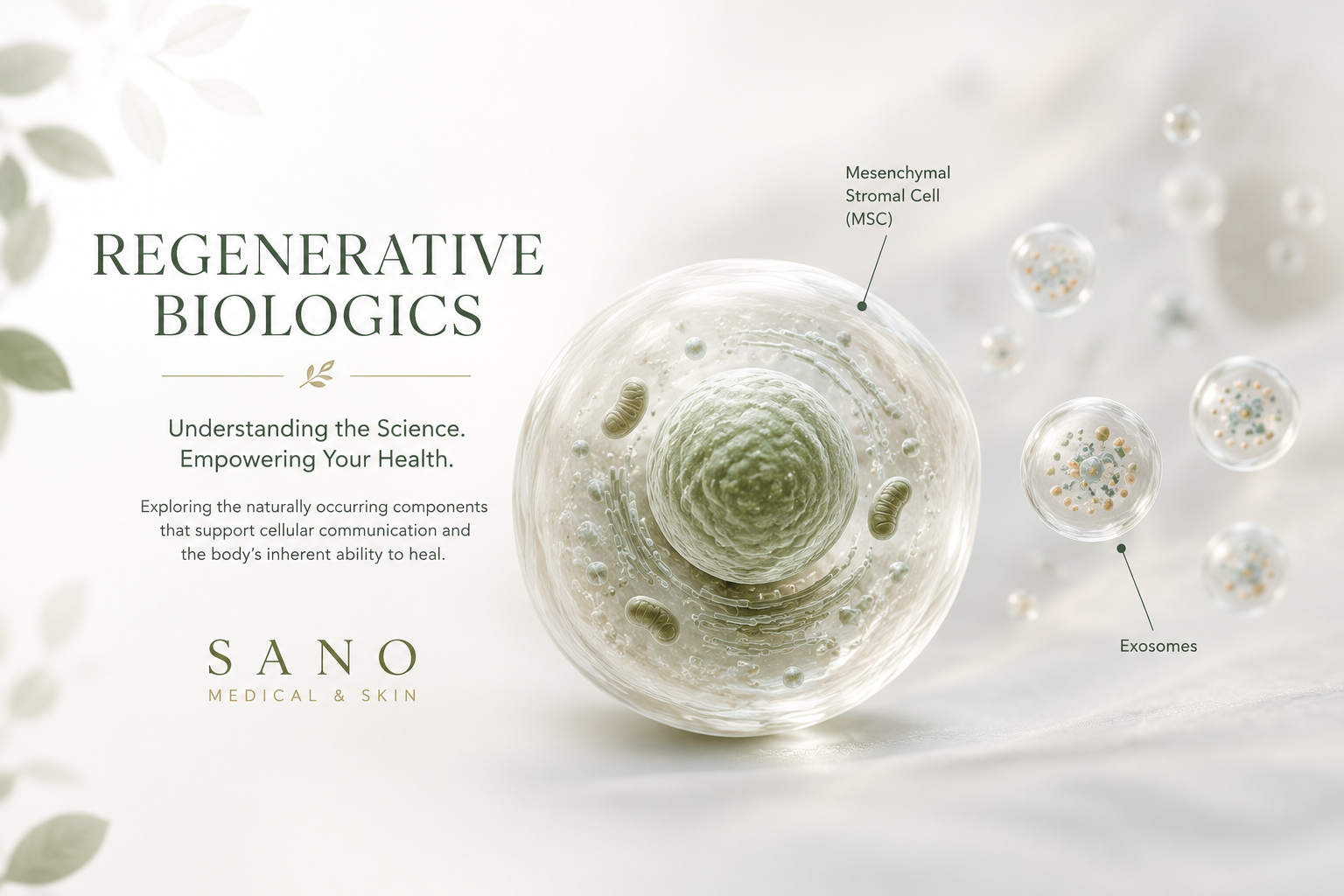
Understanding the Difference
Mesenchymal Stromal Cells (MSCs)ExosomesLiving cellsNot living cellsNaturally release signaling moleculesTransport signaling moleculesParticipate in cellular communicationFacilitate communication between cellsContinue producing biologically active substancesFunction as extracellular vesiclesStudied extensively in regenerative medicine researchStudied extensively in extracellular vesicle research
Why Understanding the Difference Matters
Patients researching regenerative medicine may encounter a wide range of terminology and marketing claims online. Understanding the basic science behind stem cells and exosomes helps patients ask informed questions about product quality, manufacturing practices, current scientific evidence, and individualized treatment considerations.
Healthcare decisions are best made through conversations with qualified healthcare professionals who can discuss available options, current research, potential risks, expected benefits, and alternative approaches based on each patient's medical history and healthcare goals.
Final Thoughts
Regenerative medicine continues to be an active area of scientific investigation.
Mesenchymal stromal cells and exosomes represent different biologic components that researchers continue studying to better understand their roles in cellular communication and normal tissue biology. As scientific knowledge evolves, patients benefit from evidence-informed discussions with healthcare professionals who can explain current research and help determine whether regenerative medicine may be appropriate for their individual needs.
References
Pittenger MF, et al. Mesenchymal Stromal Cell Perspective: Cell Biology to Clinical Progress. NPJ Regenerative Medicine. 2019.
Théry C, et al. Minimal Information for Studies of Extracellular Vesicles (MISEV2018). Journal of Extracellular Vesicles. 2018.
U.S. Food and Drug Administration. Human Cells, Tissues, and Cellular and Tissue-Based Products (HCT/Ps).
International Society for Cell & Gene Therapy (ISCT).
International Society for Extracellular Vesicles (ISEV).
Educational Disclaimer
This article is intended for educational purposes only and should not be interpreted as medical advice. The information presented is designed to improve understanding of regenerative medicine and should not be construed as a claim that any regenerative biologic product diagnoses, treats, cures, or prevents disease. Individual treatment recommendations should be based on a comprehensive evaluation by a licensed healthcare professional. Scientific understanding of regenerative medicine continues to evolve, and recommendations may change as additional evidence becomes available.
Why Quality & Sterility Matter
It All Begins Here
Understanding How Manufacturing Standards Support Product Quality
Published by Sano Medical & Skin | Evidence-Informed Patient Education
Every regenerative biologic product has a story that begins long before it reaches a healthcare provider. From donor screening and laboratory processing to preservation, transportation, and storage, each step is designed to help maintain product quality and integrity.
At Sano Medical & Skin, we believe understanding how regenerative biologic products are sourced, processed, and handled is an important part of making informed healthcare decisions. While manufacturing processes may differ between products and manufacturers, transparency and quality systems remain essential considerations.
Why Manufacturing Standards Matter
Regenerative biologic products are complex and require carefully controlled manufacturing processes.
Depending on the product and manufacturer, quality systems may include donor eligibility screening, laboratory processing, quality-control testing, preservation methods, and storage procedures designed to help maintain product consistency.
These processes are intended to support the integrity of the biologic product from manufacturing through clinical use.
Because manufacturing methods vary, patients should feel comfortable asking their healthcare provider about the products being recommended as part of their care.
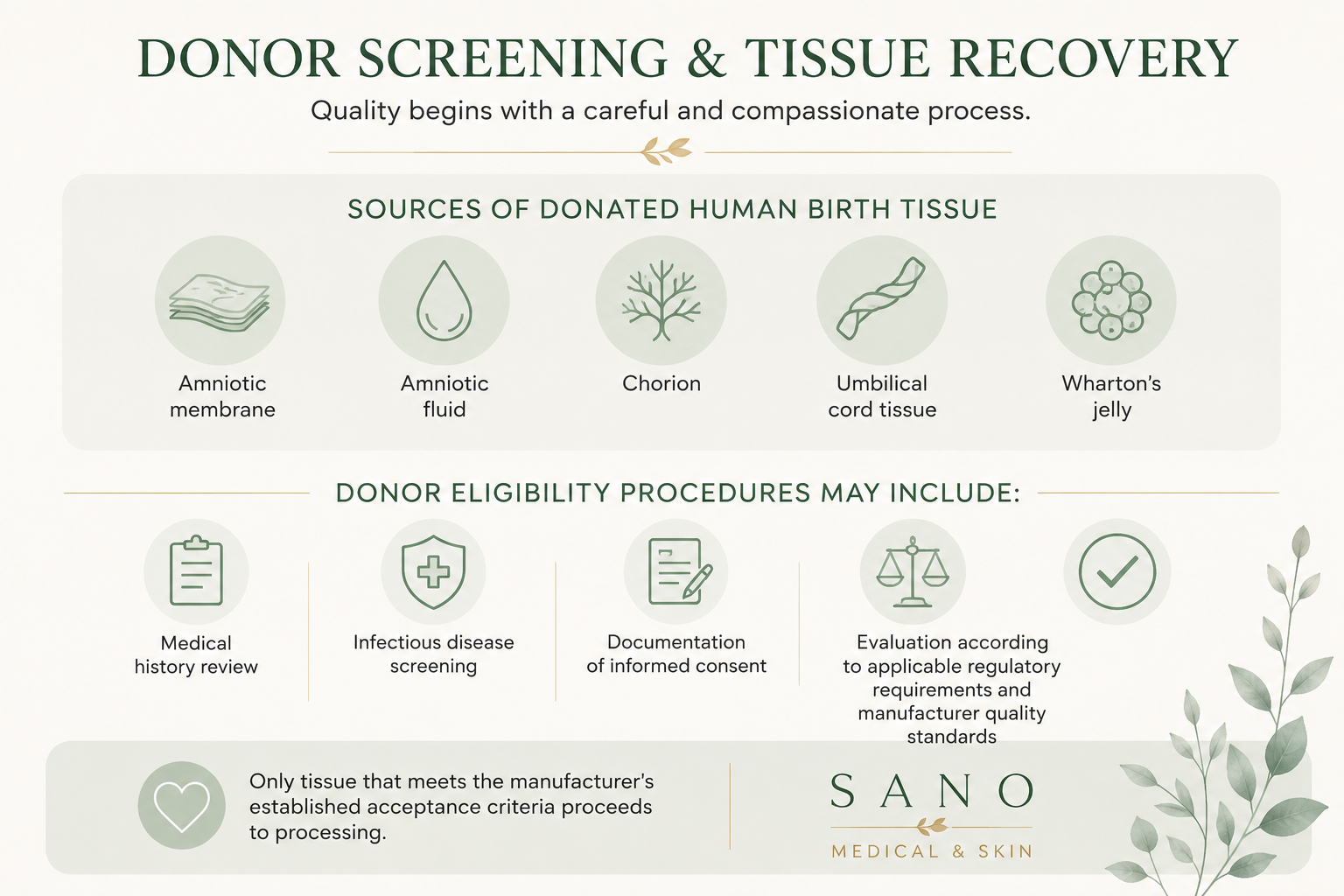
Donor Screening & Tissue Recovery
Many regenerative biologic products are derived from donated human birth tissues, such as:

Laboratory Processing
After tissue recovery, biologic materials are processed using controlled laboratory procedures.
Depending on the product, manufacturing may be designed to preserve naturally occurring biologic components, including:
Extracellular matrix (ECM)
Growth factors
Cytokines
Structural proteins
Hyaluronic acid
Proteoglycans
Extracellular vesicles
Cellular components (when applicable)
Processing methods differ between products and manufacturers.
Quality Control & Product Testing
Before a regenerative biologic product is released, manufacturers may perform quality-control assessments designed to evaluate product characteristics.
Depending on the product, these evaluations may include:
Sterility testing
Endotoxin testing
Identity verification
Quality assurance review
Cell characterization (when applicable)
Viability assessment (for products containing living cells)
Testing protocols vary by manufacturer and product type.
Preservation & Storage
Some regenerative biologic products require specialized preservation and storage conditions.
Depending on the product, manufacturers may specify:
Refrigerated storage
Frozen storage
Cryogenic preservation
Controlled transportation procedures
Following the manufacturer's storage and handling instructions is an important part of maintaining product integrity before clinical use.
Questions Patients May Wish to Ask
If you are considering regenerative medicine, consider discussing the following questions with your healthcare provider:
What type of regenerative biologic product are you recommending?
How is the product manufactured?
How is it stored before treatment?
What quality-control procedures does the manufacturer perform?
What published scientific evidence supports the product's intended use?
What are the potential benefits, limitations, and alternative treatment options?
These conversations can help patients better understand the products being considered as part of their individualized care.
Why Transparency Matters
Patients deserve clear, balanced information about the products used in their care.
Understanding how regenerative biologic products are sourced, processed, preserved, and handled allows patients to participate more confidently in shared decision-making with their healthcare provider.
At Sano Medical & Skin, we are committed to patient education and evidence-informed discussions that support thoughtful healthcare decisions.
Final Thoughts
Quality begins long before treatment.
From donor screening and laboratory processing to preservation and storage, every step contributes to the overall handling of regenerative biologic products.
Learning about these processes can help patients ask informed questions and better understand the products recommended by their healthcare provider.
References
U.S. Food and Drug Administration. Human Cells, Tissues, and Cellular and Tissue-Based Products (HCT/Ps).
American Association of Tissue Banks (AATB). Standards for Tissue Banking.
U.S. Food and Drug Administration. Current Good Tissue Practice (CGTP).
International Society for Cell & Gene Therapy (ISCT). Educational resources.
U.S. Food and Drug Administration. Current Good Manufacturing Practice (cGMP).
Educational Disclaimer
This article is provided for educational purposes only and is not intended as medical advice. The information presented is designed to improve understanding of regenerative biologic products and should not be interpreted as a claim that any product diagnoses, treats, cures, or prevents disease. Manufacturing processes, preservation methods, and regulatory pathways vary by product. Individual treatment recommendations should always be based on a comprehensive evaluation performed by a licensed healthcare professional. Scientific knowledge continues to evolve, and recommendations may change as additional evidence becomes available.
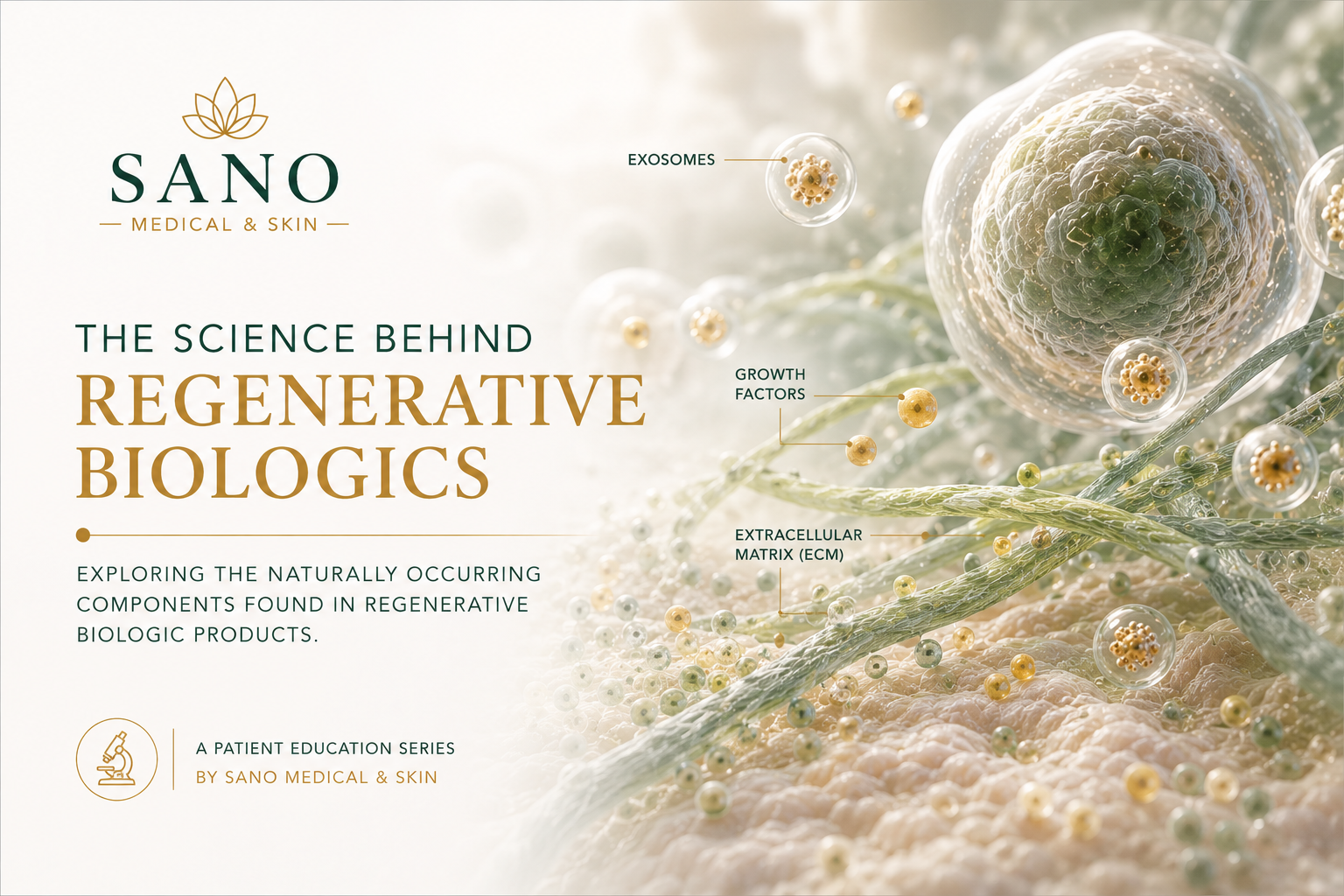
The Science Behind Regenerative Biologics
It All Begins Here
Exploring the Naturally Occurring Components Found in Regenerative Biologic Products
Published by Sano Medical & Skin | Evidence-Informed Patient Education
Regenerative biologic products contain a complex combination of naturally occurring structural components and signaling molecules that researchers continue to study for their roles in normal tissue biology and cellular communication.
While stem cells often receive the most attention, many regenerative biologic products include additional components such as extracellular matrix proteins, growth factors, cytokines, hyaluronic acid, proteoglycans, and extracellular vesicles. Together, these naturally occurring elements form a biologic environment that researchers continue investigating to better understand normal tissue maintenance and repair.
At Sano Medical & Skin, we believe understanding the science behind these biologic components helps patients make informed healthcare decisions based on current evidence rather than marketing claims.
More Than Cells
Regenerative biologic products are more than individual cells.
Depending on the specific product and manufacturing process, they may contain a combination of naturally occurring structural proteins, signaling molecules, and extracellular components that are normally present within healthy human tissues.
Researchers continue studying how these components interact with one another within the body's complex biologic environment.
Extracellular Matrix (ECM)
The extracellular matrix (ECM) is the structural framework that surrounds cells throughout the body.
It provides physical support while helping organize the environment where cells live and communicate.
The extracellular matrix contains structural proteins and specialized molecules that contribute to normal tissue architecture and function.
Researchers continue investigating how ECM components participate in tissue remodeling and normal biologic processes.
Growth Factors
Growth factors are naturally occurring signaling proteins produced throughout the body.
These molecules participate in communication between cells involved in normal tissue maintenance, growth, and repair.
Scientists continue studying how growth factors help regulate normal biologic processes under different physiologic conditions.
Cytokines
Cytokines are small signaling proteins that help cells communicate with one another.
They participate in normal immune system function and inflammatory regulation.
Because cytokines are involved in many biologic pathways, researchers continue investigating how they contribute to tissue homeostasis and cellular communication.
Hyaluronic Acid
Hyaluronic acid is a naturally occurring substance found throughout connective tissues.
It helps maintain hydration, contributes to tissue elasticity, and supports the extracellular environment surrounding cells.
Its structural and hydrating properties have made it an important area of research in both regenerative medicine and aesthetic medicine.
Proteoglycans
Proteoglycans are specialized molecules found within the extracellular matrix.
They help organize connective tissue by interacting with collagen fibers, retaining water, and supporting the structural properties of healthy tissues.
Researchers continue studying their role in normal tissue biology.
Mesenchymal Stromal Cells (MSCs)
Mesenchymal stromal cells (MSCs) are living cells that have been extensively studied because they naturally release biologically active signaling molecules.
Current scientific literature suggests many of the biologic effects associated with MSCs occur through paracrine signaling, meaning they communicate with neighboring cells by releasing signaling molecules rather than by directly replacing damaged tissue.
Research into MSC biology continues across numerous areas of medicine.
Exosomes
Exosomes are microscopic extracellular vesicles naturally released by many healthy cells.
They contain proteins, lipids, messenger RNA (mRNA), microRNA (miRNA), and other signaling molecules involved in communication between cells.
Researchers continue investigating how exosomes participate in normal biologic processes and cellular communication.
Unlike stem cells, exosomes are not living cells.
How These Components Work Together
Rather than functioning independently, the naturally occurring components found within regenerative biologic products exist within a complex biologic environment.
Researchers continue studying how structural proteins, extracellular matrix components, signaling molecules, extracellular vesicles, and cellular elements interact as part of normal tissue biology.
Because regenerative medicine remains an evolving area of research, scientific understanding continues to grow as additional laboratory and clinical studies become available.
Why Understanding the Science Matters
Patients often encounter simplified explanations or marketing language when researching regenerative medicine.
Understanding the naturally occurring components found within regenerative biologic products helps patients ask informed questions about product composition, manufacturing methods, scientific evidence, and individualized treatment considerations.
At Sano Medical & Skin, our goal is to provide balanced, evidence-informed education that supports thoughtful conversations between patients and their healthcare providers.
Final Thoughts
Regenerative biologics represent a complex area of biomedical science.
Rather than relying on a single component, many regenerative biologic products contain combinations of naturally occurring structural proteins, signaling molecules, extracellular matrix components, and extracellular vesicles that researchers continue studying to better understand their roles in normal tissue biology.
As scientific knowledge continues to evolve, patient education remains an important part of informed healthcare decision-making.
References
Hynes RO. The Extracellular Matrix: Not Just Pretty Fibrils. Science.
Pittenger MF, Discher DE, Péault BM, et al. Mesenchymal Stromal Cell Perspective: Cell Biology to Clinical Progress. NPJ Regenerative Medicine. 2019.
Théry C, Witwer KW, Aikawa E, et al. Minimal Information for Studies of Extracellular Vesicles (MISEV2018). Journal of Extracellular Vesicles. 2018.
International Society for Extracellular Vesicles (ISEV). Consensus guidelines and educational resources.
National Institutes of Health (NIH). Resources on extracellular matrix biology and cytokine signaling.
Educational Disclaimer
This article is intended for educational purposes only and should not be interpreted as medical advice. The information presented is designed to improve understanding of regenerative biologic products and current scientific research. It should not be construed as a claim that any regenerative biologic product diagnoses, treats, cures, or prevents disease. Individual treatment recommendations should always be based on a comprehensive evaluation performed by a licensed healthcare professional. Scientific understanding of regenerative medicine continues to evolve as new evidence becomes available.
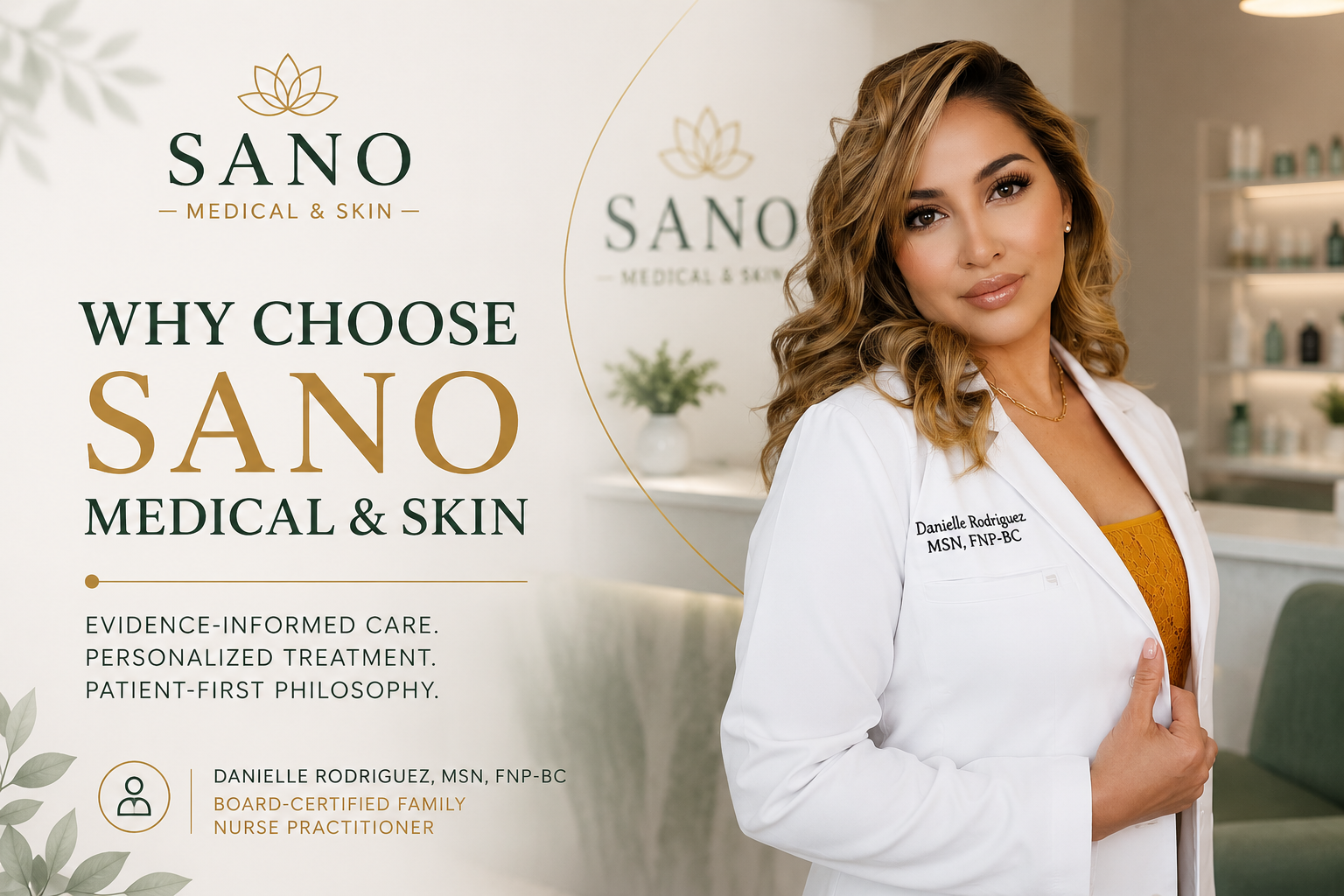
Why Choose Sano Medical & Skin
It All Begins Here
Evidence-Informed Care. Personalized Treatment. A Commitment to Patient Education.
Published by Sano Medical & Skin | Evidence-Informed Patient Education
Choosing a healthcare provider is about more than selecting a treatment—it's about finding a medical team you trust.
At Sano Medical & Skin, our approach begins with listening. Every patient has a unique medical history, health goals, and expectations. We believe the best care starts with understanding those individual needs and providing education that helps patients make informed healthcare decisions.
Our philosophy is simple: combine evidence-informed medicine, thoughtful patient education, and personalized care to support each patient's health journey.
Our Approach to Care
Healthcare is not one-size-fits-all.
Before discussing any treatment options, we begin with a comprehensive consultation that includes reviewing your medical history, understanding your concerns, discussing your goals, and determining whether regenerative medicine or other therapies may be appropriate for your individual situation.
We believe that patients should understand both the potential benefits and the current limitations of any treatment being considered. Open communication and shared decision-making are essential parts of quality medical care.
Evidence-Informed Medicine
Regenerative medicine continues to evolve as new scientific evidence becomes available.
Our recommendations are guided by current medical literature, clinical judgment, individual patient needs, and applicable standards of care. Because every patient is different, treatment plans are personalized rather than standardized.
Whenever appropriate, we discuss available options, expected outcomes, potential risks, alternatives, and unanswered questions so patients can make informed decisions with confidence.
A Commitment to Quality
The quality of any healthcare experience extends beyond the treatment itself.
At Sano Medical & Skin, we value:
Thoughtful patient education
Evidence-informed clinical decision-making
Transparency during consultations
Personalized treatment planning
Respect for every patient's goals and preferences
We believe informed patients are empowered patients.
Personalized Consultations
No two patients are alike.
Your consultation is an opportunity to discuss your health history, lifestyle, concerns, and treatment goals in a supportive environment.
Depending on your individual needs, your provider may recommend additional evaluation, conservative management, regenerative medicine, or alternative treatment options. Recommendations are always based on your specific circumstances and professional clinical judgment.
Meet Your Provider
Danielle Rodriguez, MSN, FNP-BC, MEP-C is a Board-Certified Family Nurse Practitioner with experience in primary care, aesthetic medicine, functional medicine, and regenerative medicine.
She is passionate about combining medical science with compassionate care while helping patients better understand their health through education and shared decision-making.
Her goal is to ensure every patient feels heard, informed, and supported throughout their healthcare journey.
Why Patient Education Matters
Medical decisions are important.
Patients deserve clear explanations, honest conversations, and the opportunity to ask questions before choosing any treatment.
That is why education is a central part of every consultation at Sano Medical & Skin.
Whether discussing regenerative medicine, aesthetic procedures, primary care, or wellness services, our goal is to help patients understand their options so they can make decisions that align with their individual health goals and values.
What to Expect During Your Consultation
When you visit Sano Medical & Skin, you can expect:
A comprehensive review of your medical history
A discussion of your health concerns and treatment goals
An evidence-informed conversation about available options
Time to ask questions and receive clear explanations
A personalized care plan developed with your individual needs in mind
Our goal is to create an environment where patients feel informed, respected, and actively involved in their healthcare decisions.
Final Thoughts
At Sano Medical & Skin, we believe healthcare should be built on trust, education, and personalized care.
Whether you are exploring regenerative medicine, primary care, wellness services, or aesthetic treatments, our commitment remains the same: to provide thoughtful, evidence-informed care while supporting you in making informed decisions about your health.
We look forward to partnering with you on your healthcare journey.
About the Author
Danielle Rodriguez, MSN, FNP-BC, MEP-C
Danielle Rodriguez is the founder of Sano Medical & Skin and a Board-Certified Family Nurse Practitioner. Her clinical interests include primary care, regenerative medicine, functional medicine, and aesthetic medicine. She is committed to lifelong learning, evidence-informed practice, and empowering patients through education.
References
American Association of Nurse Practitioners (AANP). Standards of Practice.
American Nurses Credentialing Center (ANCC). Board Certification Resources.
Institute of Medicine. Crossing the Quality Chasm: A New Health System for the 21st Century.
Agency for Healthcare Research and Quality (AHRQ). Shared Decision-Making Resources.
U.S. Department of Health and Human Services. Health Literacy Resources.
Educational Disclaimer
This article is intended for educational and informational purposes only and should not be interpreted as medical advice. Information presented on this website is designed to support informed discussions between patients and qualified healthcare professionals. Individual recommendations vary based on medical history, clinical evaluation, and healthcare goals. References to regenerative medicine or other therapies should not be interpreted as claims that any treatment diagnoses, treats, cures, or prevents disease.
One final recommendation for your website
Now that we've completed all four articles, I recommend adding a simple introductory page called "Welcome to the Sano Medical & Skin Learning Center." It can briefly explain your philosophy of evidence-informed education and link to all four articles in order. This creates a cohesive educational hub, improves navigation and SEO, and reinforces that your goal is to help patients understand the science before they make healthcare decisions. I think it will make the entire series feel polished, professional, and much more valuable than four standalone blog posts.